When I stepped into the Chapter Lead role, the design practice at Genesis was in real trouble. It had been shuffled between different parts of the business, reporting into leaders who weren't design specialists and didn't fully understand what the team needed to do good work. Nobody was making the calls that actually hold a practice together, on tooling, on methodology, on what "done" meant. Review sessions had become genuinely toxic, and personality clashes were eating into the team's confidence and cohesion. Over the next few years I rebuilt it from the ground up, and that work eventually earned me responsibility for Engineering as well as Design. This is the story of how that trust was built, not just the org chart change that followed it.
Maturing the UX Design Practice at Genesis Energy
CLIENT
Genesis Energy
ROLE
Chapter Lead, Product Design (2020–2024)
Chapter Lead, Product Design & Development (2024–2026)
TAGS
Practice Leadership
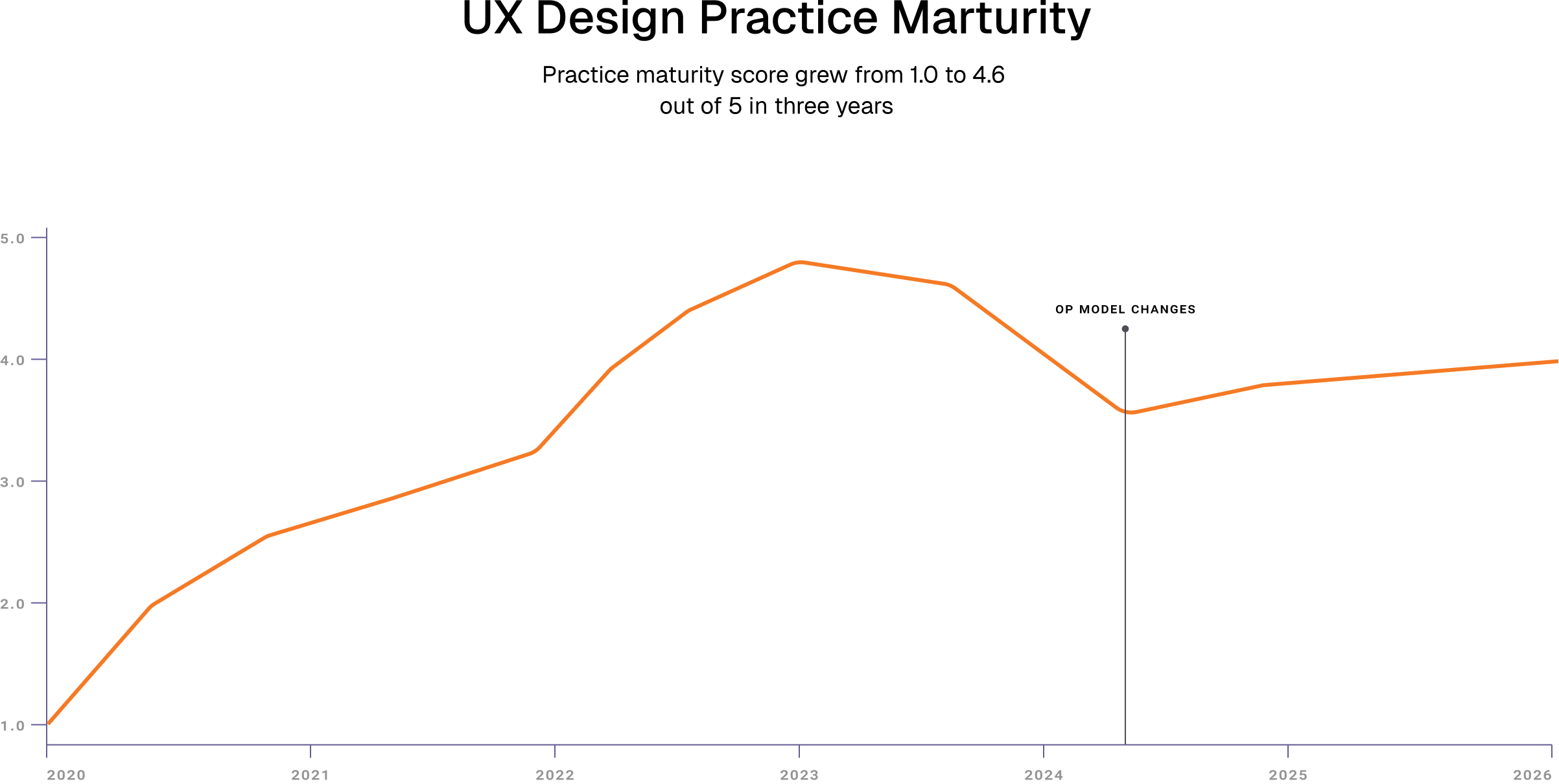
Genesis was in the middle of significant technology and operating model change, and the design team had been left without stable leadership for long enough that the basics had broken down. There was no consistent way of working across squads, no shared quality bar, no agreed feedback loops, and no structured path for growing designers. The practice was scored at 1.0 out of 5 on internal maturity metrics. Beyond the process gaps, morale was low and trust between team members had eroded.
The situation
The problem wasn't a lack of talent, it was a lack of psychological safety and structure. Designers were doing good work but bringing it into review sessions that felt like a gauntlet rather than a conversation, so people either stopped sharing early or braced for conflict every time they did. Without psychological safety, no amount of process fixing was going to stick, so that had to come first.
What I diagnosed
I focused on the structural things that let a practice mature, in this order, rather than any single project:
Psychological safety and team culture, first: Established clear team values and rebuilt trust between people through more team bonding, chapter days, and team lunches. Small things individually, but they mattered in getting people trusting each other again.
Structure for how work gets reviewed: Introduced a simple template designers used whenever they brought work to review: what kind of input they needed (an inform, versus a request for feedback), what stage the work was at, and what constraints they were working within. Feedback sessions stopped starting from scratch every time, and reviewers gave input with full context instead of relitigating decisions that had already been made for good reasons.
Coaching people into confident operators: Mentored intermediates and seniors into strong presenters who could hold their own in front of stakeholders. Their professionalism and preparedness in meetings became something stakeholders actively noticed and commented on.
Shared standards and ways of working: Design systems, quality bars, and consistent methodology across squads, so the practice had a common language instead of everyone working from their own interpretation.
This combination, safety first, then structure, then capability, is what let the practice go from surviving to being trusted with real decisions.
What I built
Genesis was navigating real organisational and technology change during this period, not a stable backdrop to build against. Rebuilding a team's trust in each other while also raising the bar on delivery meant a lot of work in ambiguity: aligning stakeholders who didn't always agree, making calls without perfect information, and holding a team steady while the ground kept shifting under them.
That consistency is what led to the next step: in 2024 I was promoted into a broader role overseeing both Design and Development, recognised for the ability to build high-performing teams and drive outcomes across complex digital initiatives, not just design ones. Design also earned a genuine seat at the table for product decisions, moving from a function that got briefed to a partner the business consulted early.
Leading through change
Outcome
Practice maturity score grew from 1.0 to 4.6 out of 5 in three years
Rebuilt a genuinely dysfunctional, low-trust team into a cohesive, high-performing one
Grew into leading a multidisciplinary team of 16 across Design and Engineering
Design systems, quality standards, and structured review practices adopted consistently across multiple squads
Design became a trusted partner in product decisions, with senior leaders seeking input on investment and delivery priorities rather than just receiving finished work